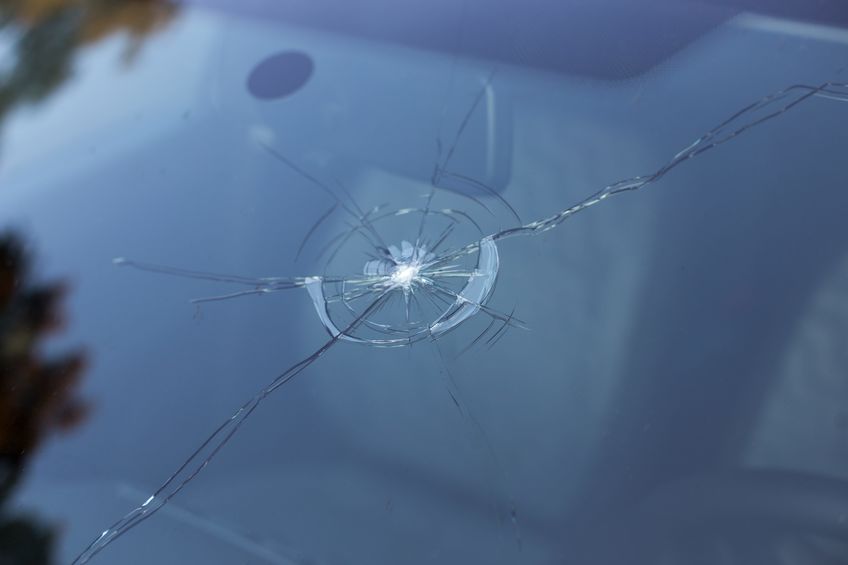
 Windshield damage can happen unexpectedly. A small rock on the highway, loose gravel from a construction zone, or sudden temperature changes can all leave marks on your windshield. In many cases, the damage starts small, making it difficult to know whether a repair will be enough or if the entire windshield needs to be replaced.
Understanding the difference between a windshield chip and a crack can help drivers make informed decisions and avoid allowing minor damage to become a larger issue.
What Is a Windshield Chip?
A windshield chip is a small area of damage caused by impact. Chips are often created when rocks or debris strike the glass at high speed. Depending on the severity of the impact, chips may appear as small pits, circular marks, star-shaped breaks, or short surface cracks.
Many chips are relatively minor when they first occur. However, even small chips can weaken the windshield and become worse over time. Moreover, since windshield glass experiences constant vibration and exposure to changing temperatures, damage rarely stays exactly the same for long.
What Is a Windshield Crack?
A crack is a line that extends across the windshield glass. Cracks may begin as small fractures connected to a chip, or they may form immediately after a stronger impact.
Unlike chips, cracks are more likely to spread quickly. Driving vibrations, potholes, weather changes, and additional pressure on the glass can all contribute to crack growth. Some cracks remain short initially, while others can extend across a large portion of the windshield in a relatively short amount of time.
When Windshield Repair May Be Possible
In many situations, smaller chips and limited damage can be repaired before the problem spreads. Windshield repair is generally intended for minor damage that has not significantly compromised the glass.
Several factors may affect whether repair is still an option, including the size of the damage, the depth and location of impact and whether the damage has spread.
Notably, damage located away from the driver’s direct line of sight is often easier to address than damage in highly visible areas. Addressing chips early is important because waiting too long may allow cracks to form, reducing the likelihood that repair alone will be effective.
When Windshield Replacement May Be Necessary
Some types of damage are too extensive for standard repairs. In these situations, a full windshield replacement may be recommended to restore the integrity of the glass.
Replacement may become necessary if:
- The crack is long or spreading rapidly
- The damage reaches the edge of the windshield
- Multiple cracks or chips are present
- The glass has been significantly weakened
- The damage interferes with visibility
Large cracks can affect both visibility and the structural strength of the windshield, making replacement the safer long-term solution in many cases.
Why It’s Important Not to Ignore Damage
One of the biggest mistakes drivers make is assuming small windshield damage can wait indefinitely. Unfortunately, even minor chips can spread unexpectedly.
Temperature fluctuations are a major cause of worsening damage in Missouri. Hot summers, freezing winters, and sudden weather changes can all place additional stress on already weakened glass.
Daily driving conditions also contribute to expansion. Rough roads, potholes, and vibrations from highway travel can gradually turn a small chip into a larger crack. Taking care of damage early may help reduce the risk of more extensive repairs later.
Knowing When to Act
If you notice a chip or crack in your windshield, having it evaluated early can help determine whether repair is still possible. Small damage may not seem urgent at first, but delaying attention can allow the problem to spread beyond repairable limits.
Understanding the difference between chips and cracks, and knowing when replacement may be necessary, can help drivers protect both their visibility and the condition of their vehicle.
If you need windshield repairs in St. Louis, reach out to us today.



Leave a Reply
You must be logged in to post a comment.